OMA 2026 Professional Fellowship Blog - Lindsay Lisanti
The Ohio Museums Association is committed to connecting and empowering museum professionals at all stages of their career, and we recognize how important professional development events like conferences are in advancing careers. We also know not everyone that works in museums have professional development opporutnities built into their personal or institutional budget.
For our 2026 OMA Annual Conference, OMA was very proud to offer current museum professionals fellowships to attend OMA 2026 in Columbus.
Today, we're kicking off our 2026 Conference series with a post from Lindsay Lisanti - one of our 2026 Conference Professional Fellows! Lindsay is the Visual Arts & Education Manager at the McConnell Arts Center. She has been with the organization since 2021 and works primarily with scheduling class terms, coordinating visual arts exhibitions, and helping direct the annual Worthington Arts Festival, an outdoor art festival featuring more than 120 vendors and attracting over 20,000 visitors each year.
Resilience Through Growth: Finding Professional Community at OMA 2026
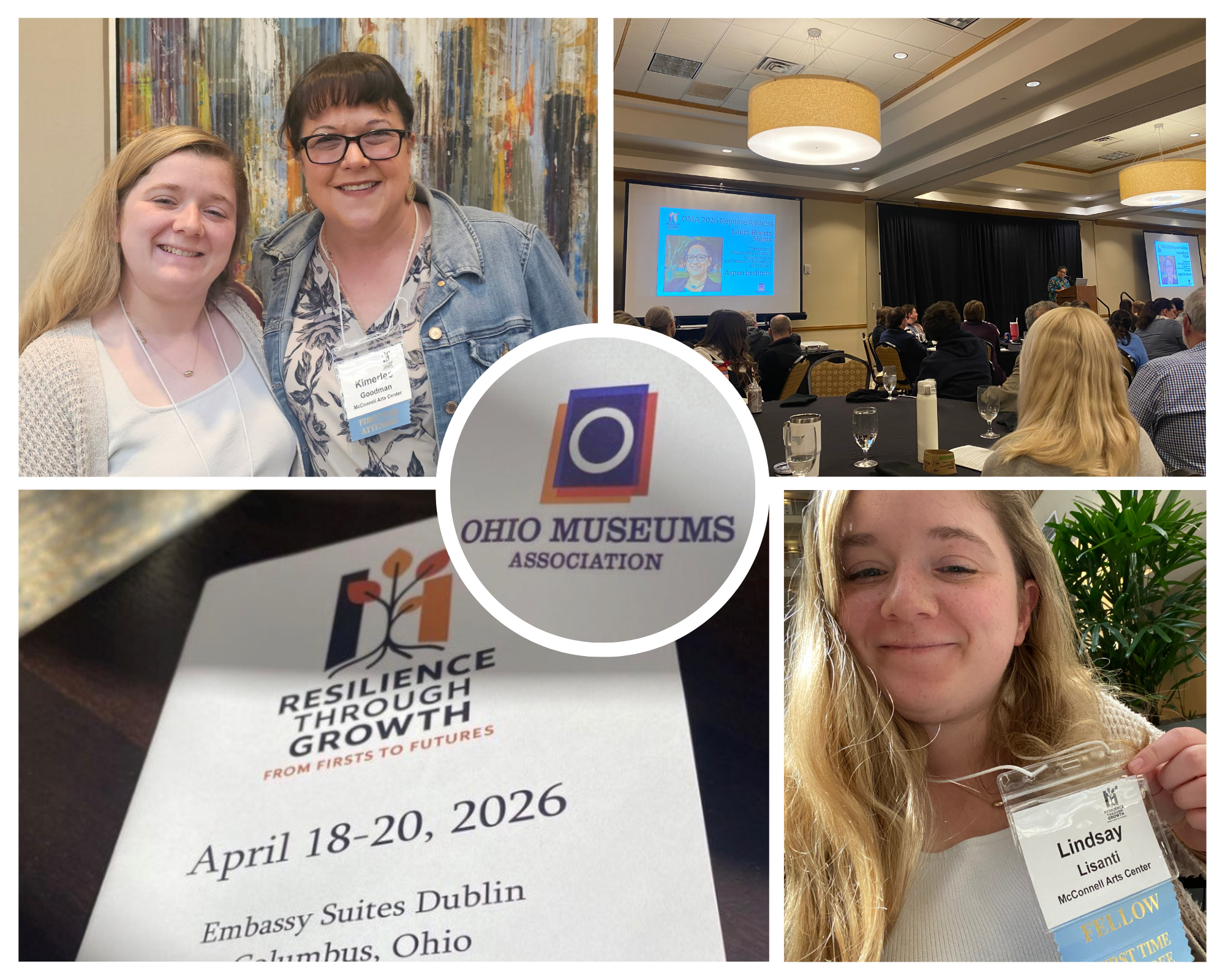 As an early-career museum and arts professional, attending the Ohio Museums Association 2026 Conference was an incredibly meaningful experience for me. Entering the nonprofit and museum field without pursuing graduate school, I often worried that I might miss opportunities for professional development, networking, and learning experiences that many others in the field gain through post graduate education. Like many people beginning their careers in the arts and nonprofit sectors, the pandemic also reshaped what those opportunities looked like and made it even harder to find meaningful in-person connections and learning experiences.
That is why I am very grateful for the fellowship opportunity provided through the Ohio Museums Association. Working for a small nonprofit organization means that professional development funding can be extremely limited, even when the desire to grow and learn is there. Opportunities like the OMA fellowship make conferences and professional learning experiences more accessible for emerging professionals and staff at smaller organizations. Being able to attend this conference reminded me how valuable in-person professional development truly is; not only for the knowledge gained in sessions, but for the conversations, shared experiences, and sense of community that develop throughout the event.
One of the most impactful sessions I attended was the “Death of the Gala” workshop presented by staff from the National Museum of the Great Lakes. Sara Smith was an engaging and thoughtful speaker, and I appreciated hearing how their organization has shifted away from the traditional fundraising gala, toward sponsorship-supported programming and higher-tier membership opportunities. While I do not work directly in development at my organization, I work closely with programming and events, and the session gave me several ideas that I can bring back to our team as we continue thinking creatively about sustainability and audience engagement.
I also attended sessions focused on membership strategies, retail innovation, and audience engagement. The Columbus Membership Advantage Program session was particularly engaging because it highlighted how collaboration between organizations can create stronger value for members. Hearing how organizations are experimenting with new approaches to membership and visitor engagement reinforced the conference theme of resilience through growth. Museums and arts organizations are continuing to evolve, adapt, and rethink traditional models in order to better serve their audiences and sustain their missions.
Beyond the educational sessions themselves, one of the most valuable aspects of the conference was simply being surrounded by professionals who are passionate about this work. Working in nonprofit arts administration can sometimes feel isolating, especially within smaller organizations where staff members wear many hats. Spending time with professionals from museums, cultural institutions, and nonprofit organizations across Ohio reminded me that many of us are navigating similar challenges while also finding innovative and inspiring ways to move forward.
I left the conference feeling energized, inspired, and more connected to the broader museum community in Ohio. I am deeply thankful to the Ohio Museums Association for supporting emerging professionals through fellowship opportunities and for continuing to create spaces where people can learn from one another, share ideas, and build meaningful professional connections.